
Home / Case Studies / Amgen Irish Open
Major event · Republic of Ireland
Seventy Systems Across West Clare
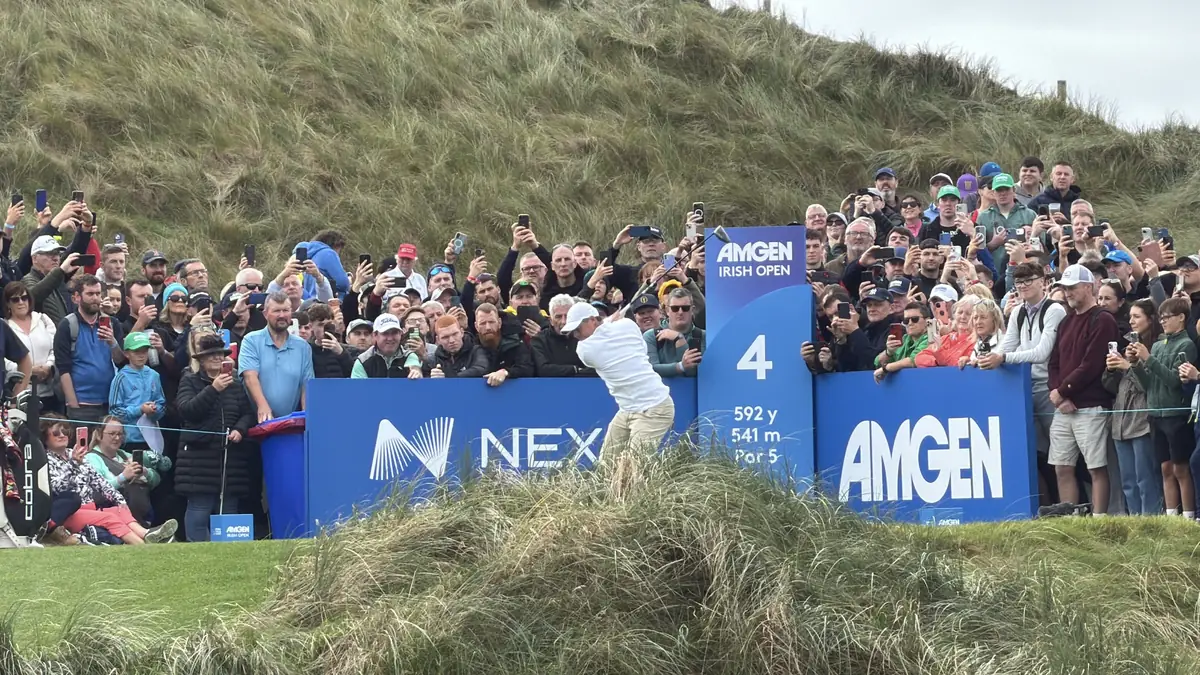
The 2026 Amgen Irish Open was played at Trump International Golf Links, Doonbeg, from 10 to 13 September. RedteQ supplied and supported the screening equipment for it — more than 35 X-ray systems and more than 35 walk-through metal detectors, spread across park and ride sites, on-course search areas and offsite screening points, with further systems supplied into Dublin in support of the visiting US President.
A Links Course Has No Front Door
Screening a stadium is, comparatively, easy. There is a wall, there are turnstiles, and every spectator arrives through one of them. A championship links course has none of that. Doonbeg sits on the Atlantic coast of County Clare with dunes on one side and a single coastal road on the other, and the crowd does not walk up to it — it parks miles away and is bussed in.
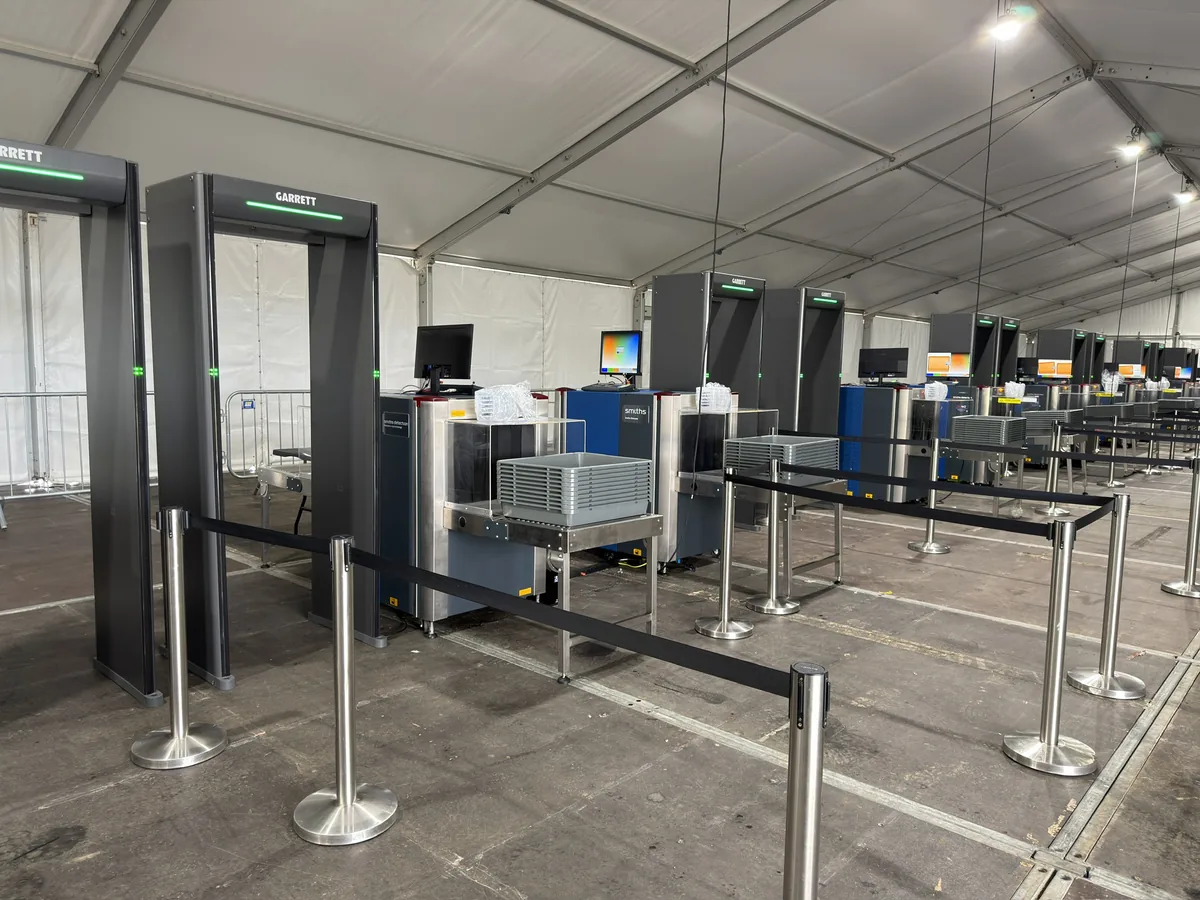
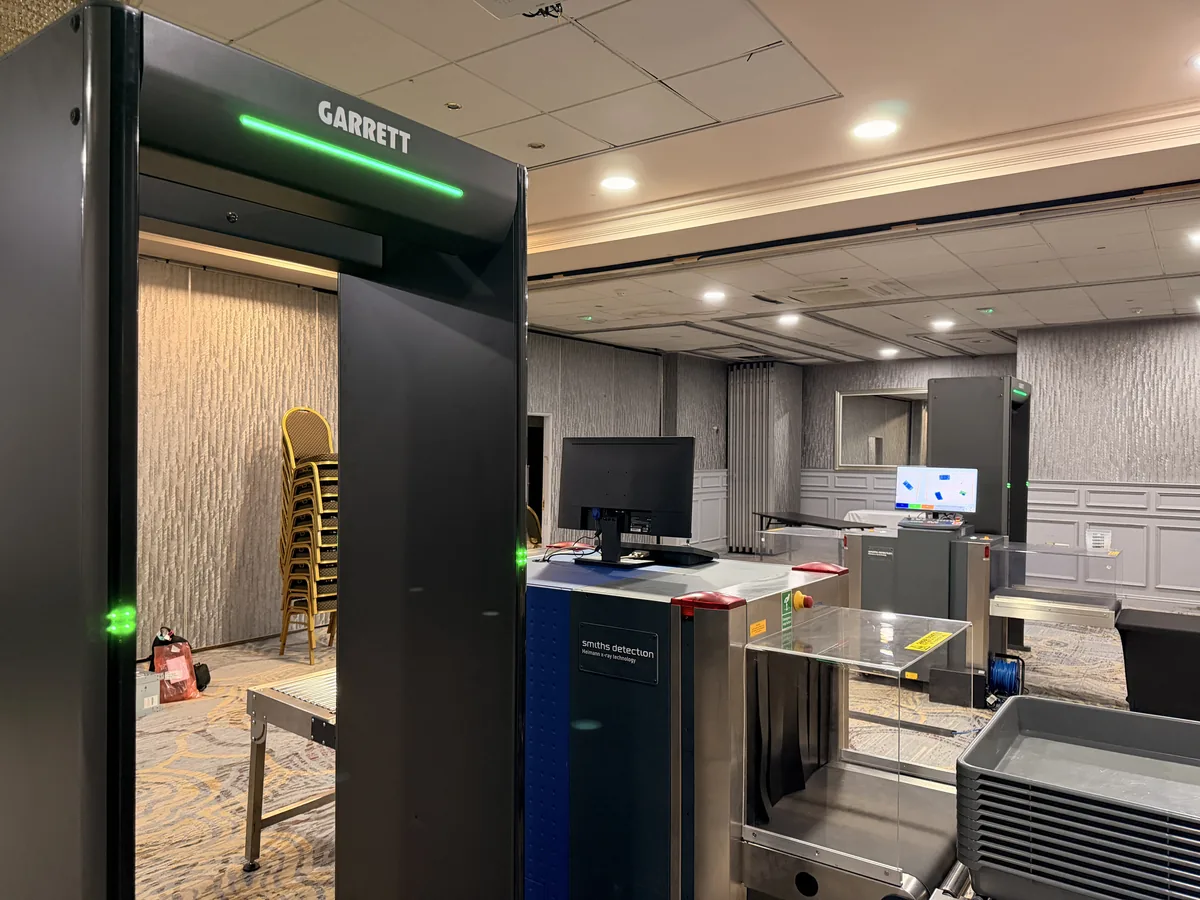
That moves the checkpoint. Screening for an event like this happens at the park and ride sites, in temporary structures on hardstanding, well before anyone gets near the first tee. There are then search areas inside the course itself, and offsite screening at the locations that feed into it. It is not one checkpoint scaled up; it is several distinct checkpoints, each with its own ground conditions, its own power situation and its own crowd profile, all of which have to behave identically on the day.
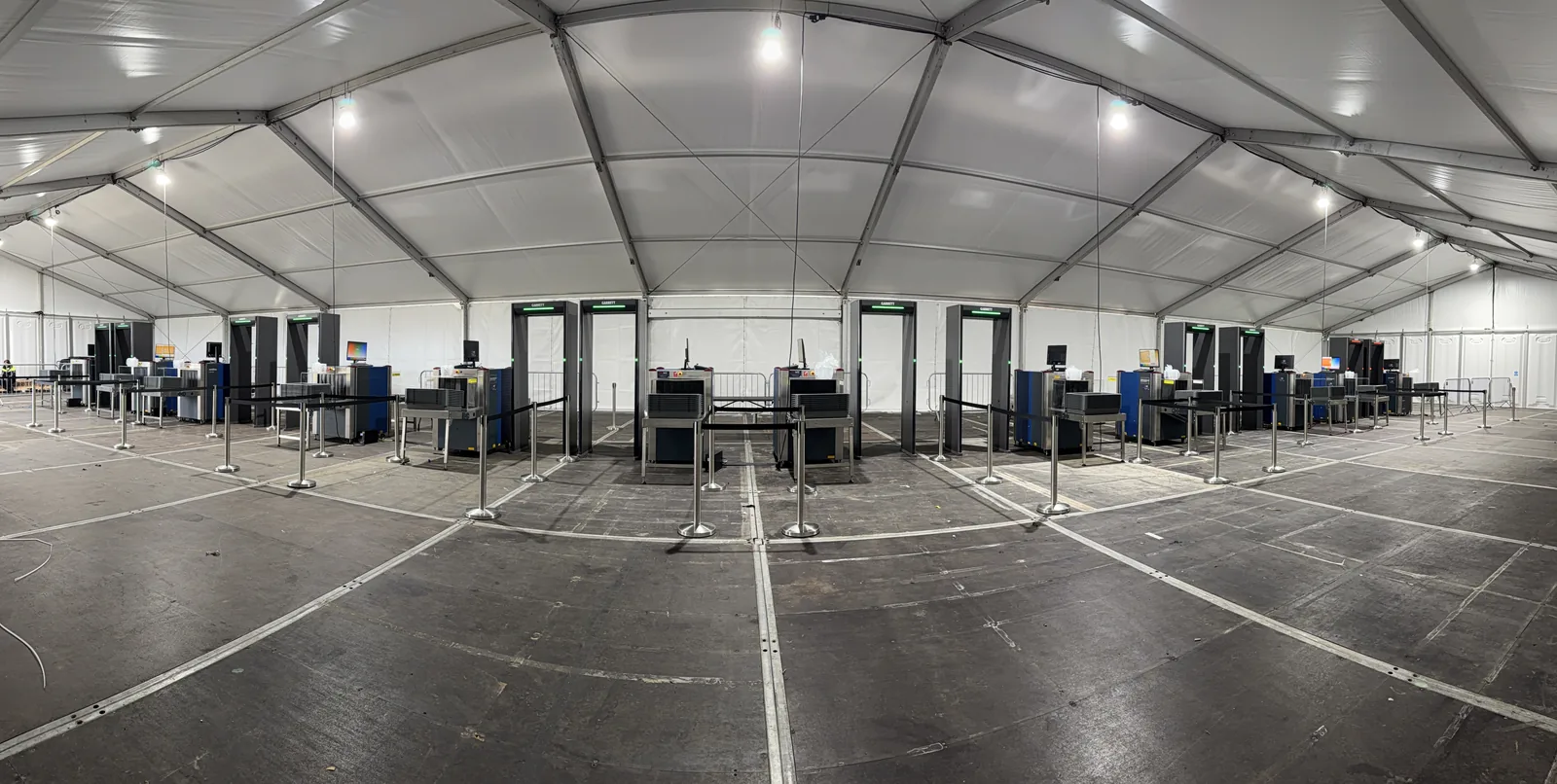
Seventy-Plus Systems, Built To The Same Standard
The count matters less than the consistency. More than 70 systems went in across the operation, and the whole point of a deployment on this scale is that a spectator screened at one lane gets exactly the same standard of detection as a spectator screened at another, four miles away, on a different site, by a different team.
That is a preparation problem more than a logistics one. Every machine left our facility tested, every archway was set up and calibrated in position, and the build ran to a programme with time in it — lanes commissioned and proven long before the first bus arrived. Temporary power, marquee flooring and an Atlantic September are unforgiving of anything less.
Two Security Operations, Planned Together
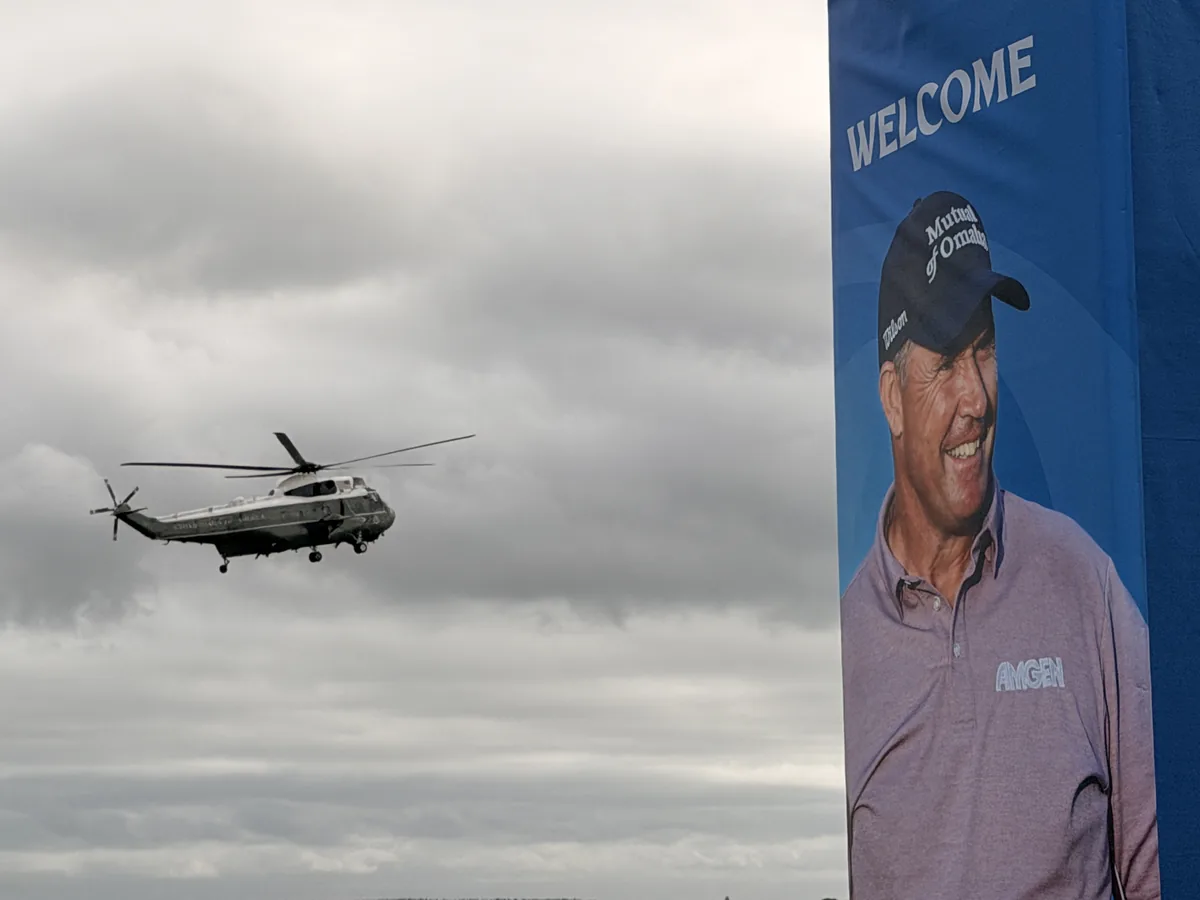
The US President's attendance was known well in advance. He came to watch the golf and to present the trophy to the winner, and the second security operation that came with it — one of the largest protective deployments the Irish state has mounted, with a parallel operation in Dublin — was designed into the screening plan from the outset rather than bolted onto it.
RedteQ supplied screening systems into Dublin in support of that visit as well as delivering the tournament deployment in Clare. We won't detail the arrangements, and it isn't our place to; what is worth saying is the engineering consequence. When a Head of State operation sits on top of a live sporting event, nothing gets a second attempt. By the time the crowd arrives the equipment has to be in position, commissioned and proven — which is exactly why the work that decides the outcome happens weeks before anyone sees a lane.
Getting It All To County Clare
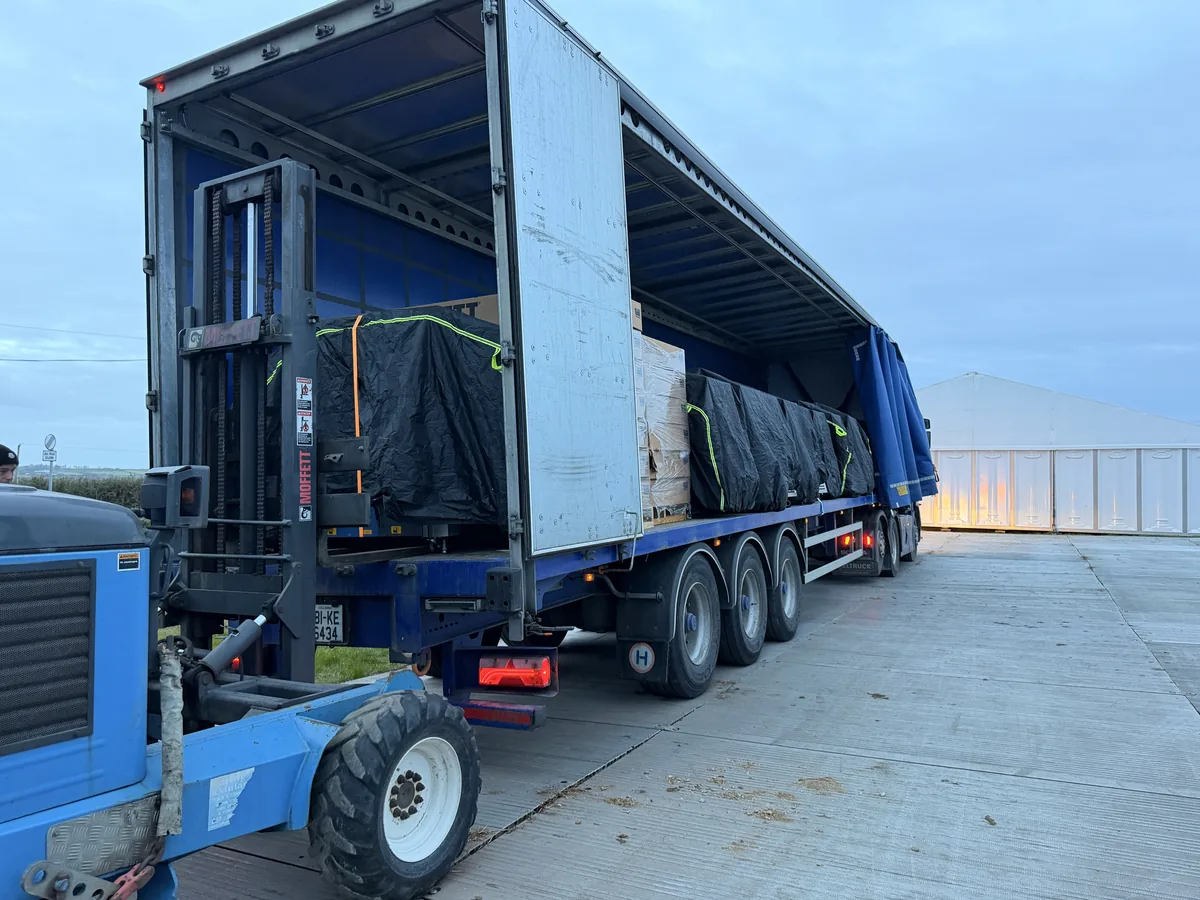
Seventy-plus screening systems do not travel light. The equipment was staged and loaded in the UK, shipped to the west coast of Ireland and distributed across the sites to a planned sequence — early starts, Moffett off the back of the trailer, straight onto the hardstanding, straight into position.
Load order is the part nobody sees and everybody depends on. Machines have to come off the trailer in the order the build needs them rather than the order they went on, or a morning that should be spent commissioning lanes goes on shunting pallets instead. Getting that right is what buys the build its margin.
Delivered With Pulse Security Management
The deployment was delivered alongside our Irish partner, Pulse Security Management. An operation spread across multiple sites in West Clare and a second city needs people who know the ground, the suppliers and the agencies involved — and it needs a screening supplier who will hand over equipment that behaves. That split worked: local operational knowledge from Pulse, equipment and technical cover from us.
Engineers Stayed Local For The Duration
Equipment support at an event is worth nothing if the nearest engineer is on a ferry. RedteQ engineers stayed locally for the full duration of the tournament, available to attend any site at any hour if a system needed attention.
It is the least glamorous line in this case study and the one that actually sells the job. A screening lane that goes down at eight in the morning with buses arriving is not a technical problem, it is a queue problem, then a safety problem, then a headline. Having people fifteen minutes away rather than a country away is what keeps it a technical problem.
What It Proves
- Scale is routine for us: 70+ systems, multiple sites, one standard of detection across all of them
- Distributed checkpoints, not one gate: park and ride, on-course search areas and offsite screening, each set up for its own conditions
- International deployment: equipment staged, shipped and built on the west coast of Ireland, plus systems supplied into Dublin
- Two operations planned as one: a Head of State visit designed into the screening plan from the outset, with no opportunity to re-do anything
- Partnered delivery: local operational knowledge from Pulse Security Management, equipment and engineering from RedteQ
- Support on the ground: engineers resident locally for the whole tournament, any site, any hour